What if the earbuds you already use could also monitor your health?
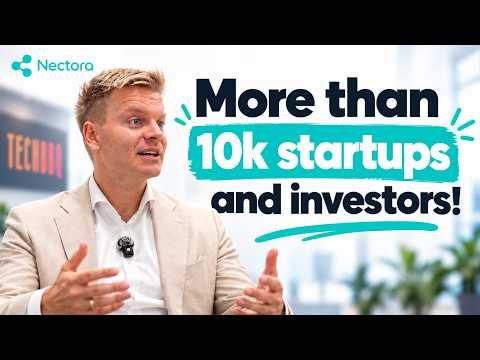
At @TechBBQ , Nectora sat down with Erika Bondareva from Auryx to discuss how her team is building technology that extracts health information from sound.
The idea starts with something surprisingly simple: noise-cancelling earbuds already contain microphones pointing into the ear canal. By repurposing those microphones, their technology can listen to signals from the heart, lungs and blood flow and derive metrics such as heart rate, respiratory rate, blood pressure and cardiac output.
But this conversation goes beyond the technology.
Erika also shares what it has been like building the company with an academic founding team, raising £1.6M, securing paid pilots, and learning that strong research alone is not enough to build a successful startup.
▸ Read the transcript
I'm personally very proud [music] of the fact that we are an all female co-founder team. We will need to [music] start speaking to customers as early as possible. We raised 1.6 million pounds. The [music] thing that truly differentiates us from everybody else is that with sound, you can do so much more than heart rate. Heart rate is an excellent place to start. Everybody has come to expect it. [music] uh you know even things like blood pressure and well cardiac output in particular [music] are things that you cannot really do with any other wearables at the moment with lightbased sensors which is what smart watches or smart rings [music] would use. You can capture information about the person's cardiovascular health but you would never be able to [music] do anything related to for example respiratory or neurological health whereas with earbuds that um is possible. Hello guys here we are with Erica from Ox. Nice to meet you. Yeah, very nice to meet you. Uh, you have uh created a system to use our earbots to detect metrics like heartbeat and others. Could you tell us a bit more about what orx does and why do we just started this? Yeah, of course. Um, at Orex, we're actually building a go-to platform for anybody who wants to extract health information from sound. um kind of all based on the premise that if you go to the doctor's office, the very first thing they do is they listen to a chest with a stethoscope because there is so much clinical information in the sound. We of course as a small company had to stay extremely focused. So we had to pick kind of one type of device that we would want to work with and that would allow us to capture sounds from which we could then extract health information. And we realized that um all of the noise cancelling earbuds already have a microphone pointing inside the ear canal. And um just by repurposing this microphone to listen to the sounds of heart, lungs and blood flow, we can extract things like heart rate, respiratory rate, blood pressure, cardiac output and much more. I think the key thing here is that it really works with just earbuds that are available off the shelf. We are just providing a software update to to this existing hardware. But overall the technology is not necessarily limited to earbuds alone. The bigger future and ambition that we have for the company is to later expand to other devices that have microphones on them. What's the difference between measuring uh heart rate with an earbot and measuring with a wearable like a smartwatch or I think um there are multiple things at play. So, first, if you think about it, if you're going for a run or even a walk, um your wrist moves a lot and motion is probably one of the biggest contributors of noise to to this type of signal. Uh head, relatively speaking, stays much more stationary. So, as a result, we can actually capture um heart rate and other metrics from the ear quite accurately. I'm thinking that if you use earbuds, a lot of people use them for listening to music. So is that also a barrier for something or I mean we make sure that our technology works. So all the typical use cases of um what activities people engage in when they wear earbuds um because being able to extract um helpful health information when the person is at rest, not listening to music, not doing anything. It's actually it's still very challenging but relatively simple. The hardest is when the person is moving, when they're talking, when they're listening to music. But we make sure that our algorithms perform well during all of those activities because well if they didn't the technology would be pretty worthless. You have raised I think 2 million pre we raised 1.6 million.6 million. How is the pitch of raising money with a research uh like yours? What do investors take into account? I'm personally very proud of the fact that we are an all female co-founder team and both of my co-founders have quite an um academic background same as me. So I myself did a PhD at Cambridge same as our CTO Kayla and our third co-founder Chichilia is a professor at Cambridge. Um and we knew going into this that we are super passionate about the technology and you know we have a really deep understanding of it but that unfortunately is not enough to make the company work and that is why from day zero our biggest focus was can we actually find people who would be willing to pay for this right because unless there is no matter how much we believe that audio is the next um sensing modality for healthcare it's it's just not going to work. So, uh we protested speaking to different consumer electronics companies to different semiconductor companies and we managed to secure multiple paid pilots. Uh and I think that is exactly what really moved the needle for us when it came to the fundraising because we could show that there are people that are willing to pay for what we've built or rather not even for what we've built to pay to test what we've built. um which is of course a very positive signal um of the market interest and you only could do that because you had research uh years of research experience in your team. I think it's just really important to know first I guess to accept that it's not going to be perfect. It will be in some initial stage but as long as you have some version of a minimum viable product you really need to go and test it as soon as you can with people who would be eventually paying for it. Um, and second, just making sure that you're in constant conversation with potential customers because ultimately you need to make sure that whatever you have built is going to solve their problem. What's the advantage or the edge of having a female lead team? How does the organization differ from normal organizations? It's a difficult question because I don't think we particularly were focused on the fact that oh, you know, we will start the company together because we're all women, right? Um it was very much merit-based. Um so yeah, we work together because we have worked together in the past. We have massive admiration for each other's work ethic and we knew that we are the type of people to do this with. In terms of how we differ, I'm not so sure. Honestly, I I don't think there is much difference. Okay, that's great. So what's the current status of Orex uh regarding the device? Yeah. So um since we raised our preed, we really have been focused on finishing the pilots that we have with our partners and um as well as initiating any new relationships with potential earbud brands or semiconductor companies. And um going forward of course alongside finishing these pilots, we're also actively working on developing our blood pressure models. So this is something that we have already built kind of very first initial version of but um it definitely requires more validation on the wider population because it's also such a such an important metric to get right. I I think that's it to be honest. Um just very much building kind of head the town where where will be ORX2 in five years time for example. So the future that we see is kind of I already sort of alluded to it in the beginning. So even though we're really focused on cardiovascular health now and beyond blood pressure and cardiac output we are also really interested in valvular pathologies which is something um that is only only can be detected with sound. that can be really seen on for example electroc cardiogram. Um so within the cardiovascular realm those are the things that we're prioritizing but eventually we want to also expand to respiratory health and neurological. I think those are the next kind of two big things for us. The coolest thing about those two things though is that um for both respiratory and neurological health analysis, we're not relying on the sound of the heart anymore because earbuds are fantastic um because they they they do effectively capture the sound of the heart. So for cardiovascular health, they're the best. But when it comes to neurological and respiratory, we are analyzing the sound of voice and that can be captured with any device that has a microphone. Could be your phone, it could be your smart speaker, could be your earbuds of course as well. Um but that is the long-term vision that we see for ourselves. We want to expand to um other health modalities and therefore also other devices. How can we improve let's say our health system with this? It's a very complicated question to be very honest with you. Um from our perspective kind of what we would like to do is try and provide as much validation as possible for um health care systems uh for insuranceances to kind of see a very clear return on investment from this type of technology from this early detection of things. There are a lot more could be said about the current state of of the systems as it is but we have to work with what we've got and that is why kind of our um plan for now is very much to focus on providing the validation that what we've built works. Okay. Okay. And is there any lesson that you could give to any researcher that is thinking about taking the path of entrepreneurship? I think the biggest um maybe not lesson but advice really is what I have already said just people need to start speaking to customers as early as possible. I think that is the single most important thing because it provides not only clarity on on what you're building and why you're building it. Um but also it's so important for adjustment of of your own timelines of um priorities. Um yeah. Amazing. That was it. Thank you so much for the interview. Yeah. Thank you very much.