Media /Video
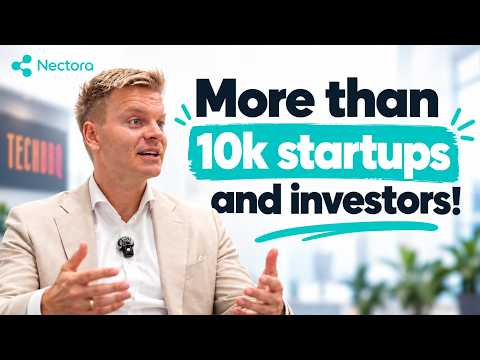
Africa — The Last Growth Opportunity for Stagnant Economies | Pierre Jalllow | TechBBQ interview
Africa is often discussed through the lens of risk. Pierre Jallow sees something else: one of the world’s most compelling remaining high-growth opportunities. At TechBBQ in Copenhagen, we sat down with Pierre Jallow to discuss the evolving relationship between Europe and Africa, investment opportunities across African markets, and what European investors often misunderstand about the continent. Born and raised in The Gambia and now based in Finland, Pierre works at the intersection of innovation, capital and ecosystem development. He is a Senior Expert in Innovation at HAUS Finnish Institute of Public Management, where he works on Africa-Europe investment initiatives, and is also Co-Founder and CEO of Remode, a Helsinki-based Europe–Africa advisory firm.
Recorded at
Copenhagen →▸ Read the transcript
So, when you look at uh high growth markets in different parts of the world, you see Africa as one of the uh last remaining opportunities to be able to make high amount of money. Not only creating companies and just trying to grow and scale them, many of them are doing two, three, four different things at the same time. Because now the African continent um has more options than just one. Uh and with options come better deals. That the floor is not low enough. That the floor is up here. Uh sometimes it speaks to the resilience that you might end up building something but not necessarily stick with it um to the end because even if hits the fan, you would still bounce back up a lot faster. >> And nice to meet you, Pierre. >> Pleasure, Julio. >> My pleasure. >> Yeah. >> Um Pierre, tell us Pierre, tell us a bit where do you come from, uh which company, and what do you do as well? >> I would tell about where I come from from a country perspective first because that's important. I was born and raised in Gambia. But I uh was adopted in Finland. Uh not adopted in the you know, traditional sense, but I uh lived and worked in Finland and became a Finnish citizen. So, I'm a European and African. And I uh I'm a senior expert uh for innovation at House, which is the Finnish Institute for Public Management. And also, I have my own company. So, we uh invest in African tech startups and and uh also do connections between investors who are raising money, so VC funds, um trying to help them raise. >> What's the name of your company? >> Uh Remod. But from this instance, so uh with with House, uh we are part of the seven implementing partners of the Africa Europe Digital Innovation Bridge. That's a 43 million um European Union program that is aimed at bridging the policy, the ecosystem, and access to finance gaps in Africa, basically. >> What do most Europeans do not understand about investing in Africa? >> might see the continent as one big entity, whereas it's a fragmented even within one country, there is fragmentation between the different regions. But with that fragmentation also brings opportunities. Most Europeans would talk about perhaps the high amount of population, growing number of deals that are mostly viewed as risky, but what they don't understand perhaps is the high growth curve that different African markets have. So, when you look at uh high growth markets in different parts of the world, you see Africa as one of the uh last remaining opportunities to be able to make high amount of money. When you compare where um Southeast Asia was, where where Latin America was, uh the growth they have had, compare that with where Africa is and the growth curve um that it has been on, we are getting to that middle-income kind of uh region or continent a lot faster than these two other regions. And I think that is something that is overlooked. >> Mhm. Why here Denmark? Why coming here to seek for seek for investors or other potential partners? >> Denmark has been making strides in uh helping their uh founders, the investors, um and in general the ecosystem to look more outside of Europe because when you look at the economies of the different countries in Europe, there's a lot of stagnation happening. Um and growth is always important for a country like Denmark. And being able to kind of help these entities enter the different African markets, I think it's is an important step. And they don't want to necessarily miss out on the opportunities um that are presented. So, I think yeah, we are here because we also are running a European Union project that is looking to get more investors into the African continent. >> How the African entrepreneur looks like? >> Well, when you look at um African entrepreneurs, particularly in the startup um scene, many of them um are not only creating companies and just trying to grow and scale them, many of them are doing two, three, four different things at the same time. Lobbying for better legislation for startups and scale-ups. Uh that means helping the government set up um new structures that would uh help a certain uh sector move faster. So, you're not only doing um things that in Europe are a given that you you know, that the infrastructure is set, you're just looking to uh build up. And it's the resilience that we see in many of these start um um startup founders uh that kind of boards very well for investments. Because usually in early-stage investing, uh it's not just about giving money, right? You mostly invest in people. And ideas can come you know, a dime a dozen, but it's the resilience of the people who are able to pivot at the right time, um stick with the business even when things are going bad. Uh that hopefully gives you that 100 x exit. >> What are the challenges of your your job? >> Many challenges. So, we can start with the the risk, whether it's perceived um or real. Unfortunately, the perceived risk tends to be much bigger. Painting Africa in one picture, one entity. Um maybe not understanding how diverse it is, maybe not understanding the depth of expertise, the depth of founders and builders who are coming up from different parts of the of the continent, who also have been starting to exit, have their unicorns, pretty successful mid-tier companies as well. And that means that they have been learning from each other, they've been building talent, they've been reinvesting in their different ecosystem. Not to mention, you have a lot of the diaspora, African diaspora, who've spent tens of years um in Europe, in America, in China, etc., who have now started to return, perhaps start up their own companies, perhaps focusing on investing. And that is enriching the African uh ecosystem. And these are really um telltale signs that um the ecosystem is maturing slowly, but the risk the perceived risks uh I think are the biggest uh that we have seen anywhere else. You know, and partly it's because there has been this whole history of the African continent um being painted in a very negative light. >> Yeah. How do you see the future of your company or your mission in 5 years? >> So, in 5 years, we hope that we will have a lot more European investors deploying capital in the African market, that the ecosystems between for example Nordics for example Germany France the different European countries that there would be more synergies between these ecosystems here and the African continent and we hope that there would be a lot more successful market entry opportunities but then also based on a win-win situation. That it's not this old model that Europe the rest of the world is looking to take and go away but more like how do we build stronger relationships relationships and partnerships because now the African continent has more options than just one. And with options come better deals right and and we hope that with the different interventions we have from Europe that we would actually make our very strong case. >> What's one lesson that European entrepreneurs can learn from African entrepreneurs? >> I think resilience we can take the Nordics as an example but this perhaps might cut cut across. There is so much that is given you would never go hungry. If you're sick you always get treated you would always go to school right because all those are free all those are supported government supported etc. And then once you have so much of those things that that the floor is not low enough that the floor is up here. Sometimes it speaks to the resilience that you might end up building something but not necessarily stick with it to the end because even if hits the fan you would still bounce back up a lot faster than most would. And this is why you say that um, immigrants make the best entrepreneurs uh, because of the stories that they have from emigrating from what- wherever they they came from and the push, the resiliency that they have, um, when they are running their businesses. And this is what I see as maybe um, something that the European entrepreneurs can learn from African entrepreneurs.
Keep watching
Related conversations
 Video
Video
They are using earbuds to measure your heart rate | Erika Bondareva | Auryx | TechBBQ interview
Conference · Copenhagen
 Video
Video
He's Building the World's First AI Hospital — The Loss That Changed Everything | Avinav Nigam | TERN
Conference · Copenhagen
 Video
Video
From a Barbecue To One of The Largest Startup Events In Europe | Benjamin | TechBBQ
Event · Copenhagen