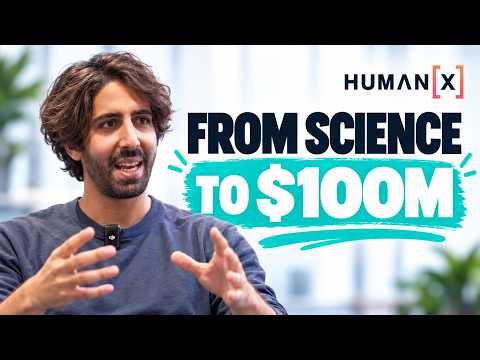
At HumanX in Amsterdam, we sat down with Fabrizio Del Maffeo, CEO of Axelera AI.
Fabrizio had no background in chip design. Then he set out to build a new AI chip company in Europe.
In this conversation, we discuss how Axelera AI was built from scratch, why competing with NVIDIA requires a different approach, why Europe needs more ambition, and where AI infrastructure is heading — from centralized data centers to Edge AI and Physical AI.
Highlights:
22:43 — Building an AI chip company without a chip-design background
28:52 — Building the first chip in six months instead of a year
35:46 — Why NVIDIA can't simply copy Axelera's approach
38:05 — Why European companies need to take more risk
38:20 — Europe's lack of ambition
39:06 — Why Europe needs to buy European technology
39:42 — Why centralized AI isn't the answer
40:54 — AI moves into the physical world and edge devices
46:29 — Why founders need to act instead of fearing rejection
47:25 — Expecting rejection 90% of the time
47:40 — The investor who told Fabrizio he was the wrong person to run the company
▸ Read the transcript
technologies are are neither good or bad, right? Can be used for great things or bad things. [music] AI to reach the physical world, be a little bit everywhere close to the community, you have to read between the line, you have to read the mood of the environment, the mood of the room said, well, if I can convince all of these people which have complimentary experience to quit, you have to take risk. You have to grow faster. Most of the power consumption the chip is due to data movement. when you take the data that you have in the memory, you move to the CPU to do the calculation and you [music] and you then put back in the memory and then what we did is essentially we build up an architectures which um integrates the computation within the memory then reducing this data movement. There's nothing to lose. 90% of the times you'll be rejected. How many entrepreneurs really died because they scared to fail and are scared to lose everything. Each crisis uh is an opportunity. So hello guys. Hello Fabricio. Hello. We are today with Fabricio, CEO of Axelera, a semiconductor company building a specialized hardware and software for efficient AI inference. And Axelera started with HAI bringing high performance inference closer to devices and now exploring a large enterprise uh and high performing computing workloads. Right. Correct. Erh your background is unusual for a semiconductor CEO our founder but you started uh from with companies that distributed hardware to more developing hardware and researching about hardware as well. So I would like to first before going to Accelera uh dive deep a bit about your personal career and uh let's start from the beginning. Well, the beginning will be that you started in the as a software engineer, but as I saw in previous interviews, you didn't it wasn't your thing, right? Correct. Correct. I started but but after a few months I quit was not for me. Okay. And then you moved to Espirinate uh which is uh they are the distributors essentially of industrial PCs of hardware uh etc. really big. So you were very young when you were given ownership of an entire new business unit. Uh what makes someone trust you with that level of responsibility in that early timing hunger? Uh did somebody saw something in you? No, I think that uh they saw uh the ambitions that I had at that time to build business uh to build a team and actually it started with me as a assistant product manager uh for uh a new product division that they had and then uh I grew up um very quickly in uh in leading the product management and eventually in the entire business unit. It took me a few years. Um, and I got this opportunity because probably I could uh deliver what the company expected me to deliver which was essentially building business revenue and profitability. What was the first mistake you made negotiating with a international or Asian supplier since uh in sprint you engage with a lot of negotiations uh with Asian suppliers and else right? I I spent a lot of time uh with Asian companies in negotiations and so forth. First mistake uh that I made probably was to oversell uh things. I was uh uh very optimistic. I always been very optimistic. You must be optimistic as an entrepreneur and believe that you can uh essentially u do things faster and and quicker and grow faster than they that anyone can expect. Then I stretched a little bit too much uh the expectations of suppliers and then it was not uh super easy to handle. Uh for example, I remember when I committed to buy a very large amount of uh boards and then I had to find a way to sell it because uh actually customer were not there but I I could manage it. And how do you find the product market fit uh in these new product lines? Well, it's it starts always to observe customers and observe big trends. to start looking at big trends in the market and uh and then within the big trends what are the problems that can be solved problems for customer perspective and what can be the uh the best solution to this product problems uh and then you go back to find the product to identify the product that can fulfill this market needs then it's pretty uh straightforward process it's just a uh matter of observing the customer and the problem of the customer in springet. Which particular evidence did you find that made you say okay this product we can uh launch it and really grow it? Well, I remember that um in in that period um was early 2000s um industrial computing was growing. Industrial computing means all the computers that you see inside uh industrial devices uh machinery medical devices and so on. There are computer everywhere all around us. Um they are there for 20 30 years. uh and these computers are uh basically the same technology of consumer computer but the shape is different of these computers [snorts] and um at the time I remember when there was this um popular form factor that was a derivative of consumer computer um was called and is still there it's called minix it was something new it was essentially a smaller version of a standard computer that at the time any person could have uh in in his house and um I I I thought that it was a great match for uh industrial application, retail applications and I made this agreement with VIA technology and it went very well. Uh we start to grow very fast and sell it through Aspernet channel. It was uh amazing. And then you moved to Advante which uh they were more like developers, industrial factory, IPCs, industrial PCs, right? um what what did they saw in you to to hire you at that moment because you entered during a financial crisis, right? Yeah, it was uh it was interesting. Uh I joined Atlantic in 2009. It was really bad year 2009 clearly after the financial crisis. um Atlantic uh uh that year lost uh roughly 50% of revenue uh um globally. It was a very tough year and I joined them after the two previous sales director was uh were released by the company and it was tough tough time. Um they offered me the job because uh uh I was lucky enough to have won couple of good businesses the previous years with Advantec and Expinet became the largest distributor in Europe of Advante in uh in in few years actually. Um and therefore um they offered me this job. I joined. It was a tough time. I had to rebuild the business but it was a great experience. Clearly I was pretty still pretty young. uh early 30s and the team is was older than me but had a chance to start in Italy. After one year they gave me the chance to take over also France, move to to Paris, uh become country manager which was uh challenging. Uh an Italian country manager of France with the French team uh was not easy at that in that moment because you know people likes to to have local managers that understand better the culture. But eventually after the first months where I I struggle a little bit uh the team supported me a lot and uh we can together we have grown significantly business in the coming years too. And how do you manage to grow uh your unit or your department uh before actually going to to other countries during a financial crisis? Well, each crisis is an opportunity. After a period of slowdown, you have always an acceleration to balance back uh on the economy. And then if you are fast enough uh if you don't give up and you actually utilize the crisis to um to uh essentially adjust your your strategy and uh uh you don't give up the connection with customers and you you help customer in crisis time then you will get rewarded and I think we did pretty well uh exactly during the crisis to build up long-term relationships uh which turn out uh to generate uh good businesses. You manage sales across France but also across other countries at the moment. Yeah. Yeah. I mean um when I started in Atlantic I had Italy um Italy, Greece, uh France, Spain and Portugal uh for one division. Then they gave me uh also the full responsibility of France as country manager on top of this. Then I got responsibility for another division for all Europe. Then they gave me responsibility for Northern East Europe and asked me to move back to the headquarter uh in the in the Netherlands where I eventually ended up to live and I'm still living. Then I travel around Europe thanks to Advanc. It was a great experience. They offered me uh a great job, a great opportunity and also met my wife in advantage. Then I mean always thankful to that company and it's also my partner today by the way. It's a it's a partner of Accelera. Then I'm very happy that I I could uh uh keep relationship with them and it was very nice. Last month I was in in Taipei. I met uh uh I met uh Linda which today she's one of the co of Advantic and at the time was a product director uh kind of it's nice after 20 years still doing business together this period of intercultural sales. How do you manage to to to grow teams and manage sales teams across different cultures? How do they differ as well? I mean Europe is a melting pot of cultures. Uh um clearly it's um it's not a country, it's not a federation either. We should be at least a federation like United States. Um you need to understand that we are different. We have a lot of similarity but we're still different within within Europe, right? And it means that based on my experience, you have to be local uh and possibly be be closer to your your partners and your customers. uh which means that um what I tried to do when I was leading this company is to have a really local sales which could better understand the culture the country and therefore be closer to customer and support better the customers. um instead of having uh people from one country try to manage another country because uh at that time the barriers were higher than today for example language. I I clearly remember going uh um to Spain and try uh to to deal in English was it was difficult was extremely difficult with people that in the early 2000 they are they were in the in their 50 or 60s than a generation um which has grown up without learning English. Now this is completely different. Nowadays everywhere in Europe you can speak English and it's easier but at that time it wasn't the case. same for um for a French to come to Italy and try to speak English. Same problem. Uh then the this language was the biggest barrier. It's still a barrier but less way less. Uh and then also the culture understanding reading between the lines the meaning of people uh you know you know if you come to the Netherlands people are very direct. they tell you uh without any problems what they think, what they want is in other countries of Europe. You have to read between the lines. You have to read the mood of um uh of the environment, the mood of the room uh and respect hierarchy in especially in South Europe. While in Northern Europe, it's more equal society where actually everyone has the right to say things in front of of their bosses. Then all of these things uh needs to be learned. There are books I read books also to to understand uh uh how language art culture can impact businesses and uh but then I also experience on my uh directly on my job. Then you joined ion right which was u kind of similar to to the previous company my my boss in advantic um uh Mr. How Arlin uh joined AON as a CEO and he offered me the chance to take over AON uh the Europe. So AON is part of ASUS. Essentially ASUS took the majority of AON um with the scope to grow the company and having an industrial division then essentially AON was the industrial uh subsidiary of ASUS group. I liked a lot this to to be part of a large corporation but with a focus on the industrial computing which was my uh bread and butter and um and also I like the fact to take over a completely complete subsidiary in Europe then uh not doing all sales product management but everything. It was a great experience. uh during that experience he started uh changing the business model of AON which means creating logistics center in Europe start to invoicing and serving customer in Europe changing sales force to become more European more regional it wasn't easy at the beginning it was a big shift in the culture but eventually paid off a lot in the sense the company had uh at the beginning was okay and then it start to have a a steep acceleration and today still think results are pretty great and during that experience uh um actually I I had a chance to to do some uh experiments. Uh one was uh I um I launched up bridge the gap which was a project I launched in Kickstarter was a a maker board powered by Intel technology. The idea was having a Raspberry Pi but more way more powerful for professional makers and creators. We launched on Kickstarter. It work very well to this exist. Why Kickstarter? How do you see that this is going to work in Kickstarter? Well, the idea was um was pretty straightforward. Ion was a brand industrial brand uh an industrial company was consumer company and none of the two uh could fulfill I think the image and couldn't match I would say uh the maker community uh in terms of branding in terms of support uh it's very different business model makers professional makers they buy online and we didn't sell online uh they are supported by community. We didn't have a community. Um you know they they share opinion on on the web about what is good or bad and this was not part of the culture to have a open channel that can criticize you and so on. I mean it was it's very different and therefore I thought uh um we can't use a a brand clearly we can't use ASUS brand uh let's build up a new brand and then uh once you have a a brand where's the best way what is the best platform to launch a new brand addressing a maker professional makers and inventors at that time was definitely Kickstarter and therefore I um I decided to do So uh it was a great experience very we spend a few tens of dollars to build up uh uh the brand the product uh was myself uh um with uh with a colleague of mine. She was great and um and we started and uh and today still exist is a product line and they still still work pretty well. And how did you manage to innovate and introduce this product and how much support did you receive from uh from a corporation from IO? I think for was um we position like up bridge the gap is a kind of customer of you. you design what app needs and we build up kind of separate units uh here in Europe to handle everything the brand the distribution globally everything and I led it uh then I co I own and also this and it works very well for this reason because we were uh controlling everything me and my colleague Alen and then we start to grow the this business uh globally uh it was a great experience to understand how to build a business, build a brand, build the distribution channel which are different than the standard one. Uh I learned a lot. I learned a lot also the fact to get feedback from the customers directly was great and Ion later on transition towards more internet of things and even uh AI uh vehicles. Do you think this product line affected in this transformation? I like this that transformations because uh um from a app was uh really an enabler of internet of things uh and um and then in um in 2017 uh with Apple brand I approached Intel to get a new technology new chip that came from a company that they acquired called Movidia. used the chip uh was for drones and I asked Intel to give me the chip to launch it in the internet of things because I saw the there was an opportunity of um you know in internet of things you collect data in uh inside these edge devices and the the the idea was uh collect data and send to the cloud for that processing I said why we should send it why we don't process inside the edge device why we don't enable edge AI or at the time was machine learning learning and this is the idea to get this chip from Intel from drones which was which had a spec specific accelerator inside build up boards and um and launch what was called the in production. It was 2018 very early I would say and from that moment even in Ion especially in Europe we start to talk about AI at the edge or on the edge we said because we like it more on the edge and it was 2018 then life a life ago if you think about talking about edge AI but then the old group shift in the direction of I would say of AI uh because more the business grow uh and more the entire company I would say took this path And it was a great experience. It was the experience that brought me to essentially one year after quit because uh I saw there was a market opportunity. I saw that ship was not the answer. Uh could not satisfy the market needs. It was a great product but not for that application. And therefore I start to I wonder whether I could solve this problem or I could um yeah build something. And I decide to quit to join Bit Fury which was uh which an a company doing mining uh chips chips for mining for Bitcoin mining. They wanted to diversify in the eye. I wanted to build a chip. Uh they had the team to design the chip. I said great let's join forces and let's build up a company. And we started with the idea of Bitfury as a company [snorts] focusing on AI. But after two year two years of incubation ups and down for the market for Bitcoin and so on. uh um we span off um span out to the this idea and started acceler and uh regarding vit is one step back uh you started also hiring technical people there. Yeah. How do you start hiring this kind of expertise when you don't come from a background that is researchdriven? Well, um what I did is uh I really started wondering whether it was possible to design a new technology, new chip in Europe and I didn't have any kind of background in chip design, neither experience at all. Uh then the the simple things I did was to uh look at papers about um chips and technology and [snorts] reaching out people that wrote this paper try to talk to them and understand better. And the first person I reached out was professor Luca Benini at University of Tsurik. I saw that was one of probably still the most expert person in Europe in race 5 technology computer technology. And through him I asked to connection because I saw he was connected to other people who wrote papers in particular my co-founder Evangelos Leario founder of Axelra and then I I start to connect with him then professor Marian Verost in um um KU Leven. uh then uh I read the paper of IMC. I reached out to IMC in Belgium and I start to create this virtual team where I said well if I can convince all of these people which have complimentary experience to quit and uh and join me in building a company. I think we can do it great because I saw great people, great expertise, a lot of fragmentation typical of Europe, right? a lot of people in different country very expert but not working together actually kind of competing in their in their small worlds when I joined the fury and I noticed that in the f theory there was no real competence in AI in chip design of AI which was very different in mining I thought okay if I can bring these people on board plus some people with more product expertise people and I I referred to people of Intel which through a colleague of mine that I hired and I own and I brought to be Fury. We got in touch for to a team of Intel here in the Netherlands, expert in chip design. Then I thought, okay, I have guys expert in chip design, guys that bring the technology. If I can put together, we can really start a great company. [snorts] Clearly was it wasn't easy. It was it was painful. It took couple of years eventually uh because um I joined Bitfury in August 2019 and uh eventually uh Accelera started in July 21 and in between we had COVID we have crisis no money I mean it was very painful but you know it worked out. What was the hardest crisis you you surpassed there? Think in this way, right? Uh I when I joined Bit Fury, I joined with a conviction that they had expertise and money and they were convinced of that. Reality is that their expertise was not the right expertise we needed for AI. And I cannot blame anybody because there was simply no knowledge on on both sides at the beginning. Me to assess them and them to assess themsel to to realize that they didn't have the same the expertise. Then you start with okay you don't have the team you have to build a team which means as I said I reach out to people and convince them to quit IBM which or bigger or intel right for what to join a startup uh with a and wanted to be co has zero experience semiconductor you're crazy uh second of all for the same reason you need money unfortunately I joined with fury when becon went down seriously down. We're talking about 4,000 euro per uh bitcoin, right? than today I mean uh you know today is 70 80,000 right it's very very stable the town was 4,000 which mean was not profitable anymore that business and before fury found themselves to have other priority than AI because they had the business to to handle AI was how to diversify business therefore you need money then was there was no money clearly then you have to raise money but how can you raise money with no credibility I mean Why on earth an investor should put money on a virtual team led by a person that never designed chip? Okay, I had experience in computing. I had experience in go to market product and I could articulate this but still in Europe people they don't take risk. Why to take a risk? And this was second problem. Third problem there was covid covid was c big crisis uh you cannot meet people you cannot meet investor you cannot even meet your own team. All of that came together. Um and that was tough was extremely tough to to navigate that period and uh to to survive and and essentially start acceler uh yeah difficult time. You raised 12 million right in the first seat round in Excela. Yes. How do you decide what to do with that money? But was already when you raised them if you if you want to raise money, you have to tell the investor, you have to have a plan. You have to articulate your plan. Uh you have to give a clearly a five years vision typically, right? But then you you you have to articulate what you want to do with the first in the first step with that money. and uh was pretty straightforward for me uh was to deliver uh a proof of concept which could prove that our technology worked um and it's what we did on the time we promised as I understood from other interviews or they told you you could build the chip in one year and you built it in 6 months what did you do also differently to yeah you have to take risk right you have to focus on the minimum viable product for whatever is your purpose. Our purpose at that time was validating the technology and show to investor listen this technology works and uh we need more money to productize it. Clearly [snorts] investors would have preferred to have a product which we could also monetize but was not possible. I didn't see any way to deliver something more than proving the technology which was also something that stressed the investor because they they knew since day one that the 12 million would not generate any revenue would generate only would confirm or not whether our uh hypothesis was was true. Uh, and then we would have need way more money. And then this was also not easy because essentially um I was telling the investor listen I need $4 million but you know but then I will need other 20 or 25 to to arrive to a product which what exactly happened because after uh a year um I had to raise uh 20 million euro a little bit more then it became 28 and then we had other 10 million to to bring that proof of concept of of technology to a minimum viable product for customers. Right now the business model of accelera is still designing chips. Yeah, of course we are a fabless semiconductor company. Then um we design chip and uh like uh every company including Nvidia, AMD excluding Intel that they have their own line although they outsource a lot of production then you go to TSMC or Samsung for the production but essentially yes we design chip. One of the advantages of uh your chips is that they have the memory and processor in the sense spot right so there is faster or how would you explain it in your Yeah I would explain that um in artificial intelligence you need to solve two problems to do uh billions of computation very simple computation which are vector matrix multiplications uh which means table of numbers very simple numbers and doing the accumulation right and you have to do billions of this calculations uh or even trillions actually of calculation trillions is it's it's more the yes and um and to do so the the standard architecture does not fit the bill because your computer is not parallelizing calculation. It's kind of doing a a lot of complex calculation but in more in pipeline way in in a uh um in in different way without paralization and therefore first of all was okay to optimize create an engine which optimizes this and second of all solve the problem of power consumption when you do trillions of calculation. So you have to find a way to do it at a lower power envelope because you have so much calculations. You cannot uh um you have to really optimize everything and if you look inside the technology um you you understand that most of the power consumption the chip is due to data movement. when you take the data that you have in the memory, you move to the CPU to do the calculation and you and you then put back in the memory and then what we did is essentially we build up an architectures which um integrate the computation within the memory then reducing this data movements. Then uh doing so we could do transform a memory in a computing array which means we could uh uh parallelize computations making trillions per second operations. Uh reduce the data movement which means low power consumption and uh increase the throughput because uh um and reduce the the cost because the area is small because you have the memory and the computing in the same area and then you have low cost. Accelerate specialize in inial LII meaning you don't use the chips essentially for training as much. No, no, we specialize to to uh to run networks. Uh because um we we started in ed at the edge. At the edge you don't train the network, you just run it. Uh for obvious reason to train a network you need to connect thousand of [snorts] uh of computer and uh it's a very different process. While to run a network you just need one CPU. Then running a network a network can run anywhere but a network cannot train anywhere. Not today, not with the technology today. There are progress but eventually you have to combine multiple CPU to if you want to train a network and therefore yes we focus on that. We are still focus on that. We want to keep this focus for coming five years at least just um be the best in terms of throughput per dollar or euro and throughput per watt in running networks. uh from embedded devices to servers because as you said at the beginning uh we are scaling up our technology scales very well uh and therefore we want to scale from a standard edge device going up to to a server for this scaling the kind of hiring also changes how has changed the the kind of teams that you're building right now did not change uh uh the profile of people we are hiring excluding uh recently that we are building up maybe a a division more focalized on the server space really to to deliver the server but it's it's not a big division because most of that work will be outsourced to large OEMs then I think um we we kind of scale the team in the same way we learn a lot then people that start in Acceler 5 years ago in 5 years they learn so much that they became senior in in uh in their function. Then even junior engineer today in acceler are not anymore junior. People that started 5 years ago as a junior engineer they are senior. They have very tons of expertise and AI is also facilitating us in the development. Uh we adopted AI immediately. uh more than a year ago we started to push for AI and now AI is in in the design flow of the software in the design flow of the chip of the hardware and this has and this allow allows us to augment the theme augment our expertise and uh speed up all the development how do you prevent other microchip giants like Nvidia from copying you can't prevent anything it's just uh it's um the innovator's dilemma Um the question is um we built up a company from scratch optimizing for one task inference and optimizing everything is direction and existing income like Nvidia uh that is there for 30 years they didn't build up the company to do so they build up the company to do parallel computing and then gaming and eventually they ended up in the eye. It means that the core structure is completely different and it means that uh they their business model eventually uh is also different. They are targeting market a higher viable market where they are not selling anymore the chip. They're selling Nvidia is not a cheap company. It's a data center company. They're selling everything including cables today and including cooling systems. Right? Then I cannot prevent them to copy. Well, I I have patents, but indeed anyone else can try to copy us. The question is why to do it? Because even if they copy, they should uh change completely this cost structure and their business model because I'm selling cheap and cars. They are not anymore doing all that. The cost structure is different and and and second of all the margin then it means is different. They have to change marginality. Why to do so? Let's say that I'm uh I'm accelerating and in and in five years accelerate is doing five billions which would be a great number right a company in a semiconductor doing five billions means valuation probably of 100 or 150 billion so what what is 5 billion for Nvidia for a company is doing three 400 billion per year it's 1%. Do you care? Do you really care about that? Why why you should disrupt yourself? This is a typical innovation dilemma. Why you you want to disrupt? You don't disrupt yourself unless there is a reason. You try to just ignore until you cannot ignore or if you are really scared, you try to buy out the the company. There are other tactics, but you don't typically copy uh a company that is entering a market with different technology with different approach unless you see that it's a real big threat. What's the next step for European companies if they want to compete with us? Grow. [laughter] I mean, it's easy. Grow, right? It's uh you have to take more risk. You have to take risk. You have to be uh grow faster. We have a little bit of lack of ambitions. We we we like uh the way we live in Europe, which is more balanced. Um we like to build up businesses, but we like to build up small medium enterprises in Europe. We're very great to do this family companies and so on. And then uh I think that we still lack the ambitious the ambitions of create worldwide leaders. Luckily this is changing. Uh I think a new generation of founders that are even they are younger than myself are definitely more ambitious than uh probably my generation which is great for Europe. Then I'm very bullish for the future. But we miss this. We miss the ambitions. We we missed the capital. Now the capital is coming and we still need to believe more in our own technology. Europe does not purchase European technology. We like uh uh foreign technology. We fall in love with foreign technology quite easily and this is an issue uh because we have to generate our own markets and it starts with probably government investing in European technology buying European technology, European citizens and buying European technology and that will create a flywheel that will uh uh reinforce European ecosystem. How will the AI sector change in the upcoming five years? Well, in upcoming five years, I think that we will realize that centralized AI is not the answer. Definitely, it's not the answer in Europe, but even globally. Uh what I mean for centralized AI is that today everyone is focused on gigafactories, right? And these uh huge uh factories full of uh uh computers that are there to train and run networks. I don't believe this is the way to do uh uh I don't believe it's scalable. Uh and maybe in United States you can do it but in Europe already uh I I I struggle to see it because we have we have problem of energy. We are we we need energy which we don't have. It's difficult to centralize things to have a place where you find enough energy when you find enough water. I mean it's it's a really a problem in many countries of Europe. uh it doesn't reflect European reality that is decentralized. In Europe we have plenty of countries, small countries, more city completely decentralized. Uh and then what I expect is um from infrastructure perspective I expect uh AI to decentralize faster than we may think. AI to reach uh the physical world physical AI then AI in physical devices. in edge devices then be a little bit everywhere close to the community with a less impact on the community from a uh footprint perspective in terms of data center and so on. I expect um um the progress to continue in AI which means that the model that today are seen as cutting edge will become open source in 12 months time even and accessible to everybody. smaller model powerful enough to run in devices will power the life of everybody which means that we if we embrace AI uh we can grow faster and I say always to company if you don't embrace today you're doomed you have to you are going to get disrupted two concerns I have that once one one concern is that we are not embracing enough AI a lot of company are still skeptical and the paradox is that you have if you don't embrace you will be disrupted because you are ignoring something that can replace you in many in many many work and actually as a professional whatever uh subject you should embrace it and understand what you have to do to fulfill the gap that I still have in your sector instead of think I'm better than the eye in what you're doing because you're not 90% of the cases or you will not be in coming of years then embrace soon as possible and it's not happening the second concern I have which means if you don't embrace we are not creating new jobs or adjusting new jobs and then we're going to lose jobs because you are ignoring something that is doing doing the same things of you but better at a cheaper cost and the second clearly I'm a little concerned that uh yeah AI is developing very fast and uh clearly we we should uh technologies are are neither good or bad right typically uh can be used for great things or bad things and I can be used also as a weapon to a certain extent right uh and I I'm not referring to the terminator that is coming and kill you but yeah I can take over a market for example financial markets disrupt financial market disrupt uh uh disrupt other markets uh creating huge impact on the global economy therefore uh we need to regulate AI um government should step in together with organization to to regulate it. We should do it as soon as possible because the progress of AI is uh is faster than what people may think and we should not just dismiss say yeah no but the I will forget it. It's they will will never disrupt this. It will never be intelligent enough. It's wrong. It's wrong. It's completely wrong. It's not a question of defining what is intelligence or not. AI is disrupting things. AI is growing faster. AI is having an impact in many sectors. Uh and um and we need to regulate I think um without stopping the progress but step in a little bit and understand uh what we should do and what we should not do and who should access to what. What are the challenges of Axelia AI right now? But the challenges of acceleria right now it's reach the level of maturity in terms of reputations where customers they just buy acceler like an Nvidia or other thing think it's acceler they don't think it's a startup uh then moving from this idea startup to an established company which has uh great products great technology is delivering constantly u has a road map as a has reached a maturity in the quality of products which is hardware and software. I think this is the challenge right again we go back to no one got fired 20 years ago to buy IBM uh 30 years ago IBM computing uh and no one gets fired today to to buy Nvidia. you're safe if you buy Nvidia but what if you buy acceleria or instead of AMD or someone else uh and it does not work right [snorts] uh you're everyone will point it why you did it right then I think we have to to to to prove to customers and we are doing that there you should not be scared acceler is close to you it give you support that you need um it's it's more a human company because you have we still are the iz that we can be close to customer and talk to customer then you have an interface uh because what is a small business for large corporation for us is a great business then we give uh we have more dedication to customers but still is and this this I think is the the last step of acceler uh become an established company in terms of perception customer perception be sure that yes I use accelera it's great acceler means great quality Great technology and they love it. Thank a lot of entrepreneurs will be watching this. Any lesson for them? Well, plenty of lessons right that uh that I learn. The first lesson uh this is the the most basic lesson that I always says is uh just um act. Um what I mean act which looks of course you have to act. That means that um uh I still think a lot of people they they don't take the risk. They don't act they don't reach out potential customer. They don't reach out potential investors. They don't put themsel um in front of uh difficult conversations because they're scared to be rejected. This is the main problem. I would say is the biggest problem for um any kind of entrepreneur I met including myself because I experienced so myself is really to to dare uh to act and say get out from your comfort zone and just don't take for granted anything but not even uh think that you know without trying things things and which means then confront with customer confront with investor knowing that um 90% % of the times you'll be rejected. You will be pushed back. They will tell you that uh actually they will not even tell you probably uh what they think. Uh to me just one investor told me that uh clearly I was not the right person to run this company. That was a Dutch investor very direct that told me I love I like everything. I love your company your team but you're the wrong person to to run it. then it was great lesson and it's painful when someone tell you tell uh tells you this uh but um but you have to used to that to rejection right uh and I think when I say you have to act is because I think sometimes we don't do things because we say to oursel and to our peers ah I don't do it because I know it will not work I know it will not is not a match it's not true you don't do it because you are scared to here you are not the right person your product is not good I don't want to deal with you you don't and this is the thing the important lesson and the second try to do things never be scared to to fail which is linked to the first time for first things I said because even if you fail there's nothing to lose um that's said no no one I I don't know how many entrepreneurs they died because they failed in something. Uh you don't die. Uh you have to just reinvent yourself again. You have to you fall down. You have to step up. Uh and um and this is something that a lot of entrepreneurs I think um they are still don't uh don't realize and they don't take enough risk. Uh because they they have they are scared to fail and are scared to lose everything. But you will not lose everything. you will lose your business, your business will go down uh if you really fail. Uh but it's part of the of of the big scheme of things, right? Because you're an operate entrepreneur, you should start with the idea you know already that there are higher chance to fail then just try to act but don't be scared to fail. Uh and the interesting things is that more u less safety net you have uh better you perform. Um therefore uh uh which is a paradox I think is also a problem of Europe right we have so much safety net that uh you expect you have a safety net you should take more risk no actually no you don't take risk probably uh with less safety net we will be we would be more angry uh to succeed more in need of succeed they would take more risk and uh and grow better the business but this is just my opinion thank you Ficio, that was it. You're welcome.